Bristol Stool Chart with Real Examples
Understanding your digestive health doesn’t have to be complicated. One of the simplest and most widely used tools is the Bristol Stool Chart, AKA a Poop Chart. This is a medical guideline that helps us classify stool into seven distinct types, and gives you the language to talk about your stool. Whether you're monitoring gut health, adjusting your diet, or discussing symptoms with a healthcare provider, this chart is incredibly useful.
What Is the Bristol Stool Chart?
The Bristol Stool Chart (also called the Bristol Stool Scale) was developed by medical professionals to categorize stool based on its shape and consistency. It’s commonly used in diagnosing digestive issues like constipation, diarrhea, and irritable bowel syndrome (IBS). The chart includes 7 types of stool, ranging from hard lumps to entirely liquid.
WARNING: You are about to see real photos of stool. Scroll down past the descriptions for real stool photos. This is for educational purposes only and is not meant to be medical advice. Understanding factors that change bowel movements is highly nuanced and this is not a comprehensive guide. Speak with your doctor and dietitian if you have concerns for yourself.
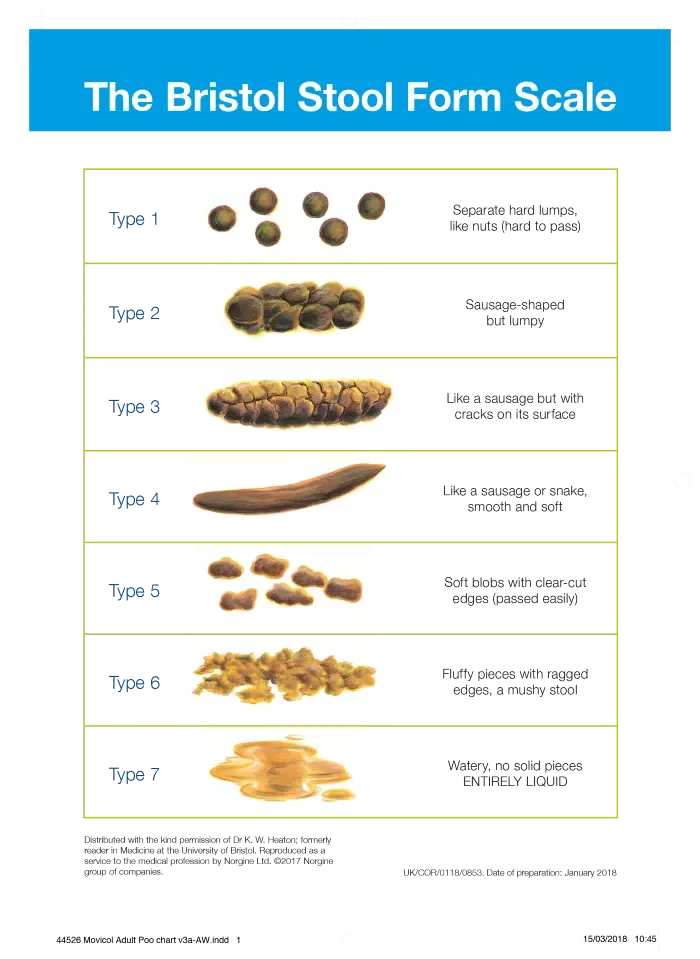
Bristol Stool Chart Types With Visual References
Type 1: Separate Hard Lumps
Description: Small, hard, pellet-like lumps
Indicates: Severe constipation
Common Causes: Low fiber intake, dehydration
Type 2: Sausage-Shaped but Lumpy
Description: Firm stool with lumps
Indicates: Mild constipation
Type 3: Sausage with Cracks on Surface
Description: Well-formed but slightly dry
Indicates: Generally healthy, but could improve hydration
Type 4: Smooth and Soft (Ideal)
Description: Smooth, soft, snake-like
Indicates: Optimal digestive health ✅
Type 5: Soft Blobs with Clear Edges
Description: Easy to pass, soft pieces
Indicates: Low fiber intake
Type 6: Mushy Consistency
Description: Fluffy, mushy stool
Indicates: Mild diarrhea
Type 7: Entirely Liquid
Description: Watery, no solid pieces
Indicates: Severe diarrhea ⚠️
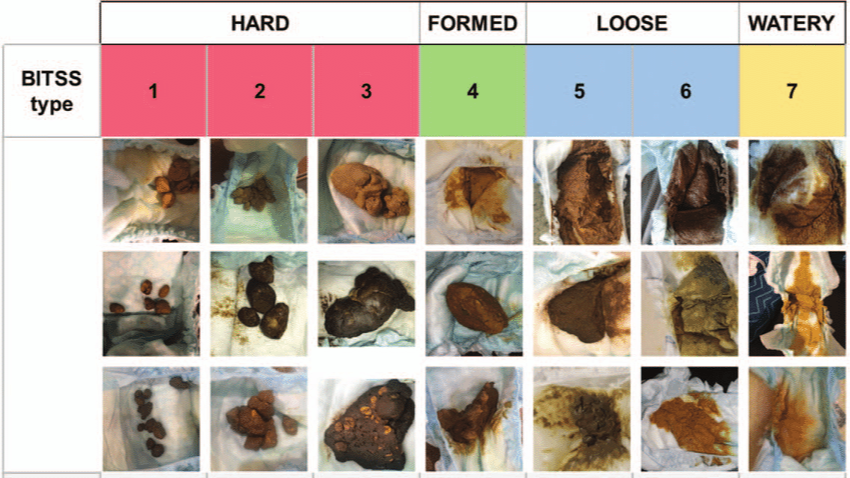
FAQ About the Bristol Stool Chart
What is the ideal stool type?
Type 4 is considered the healthiest—smooth, soft, and easy to pass.
Is it normal to fluctuate between types?
Yes, occasional variation is normal depending on diet and hydration.
Can diet change stool type?
Absolutely. Fiber, fat, and fluid intake all play major roles.
When to see a doctor about stool?
Seek medical advice if you notice:
Persistent diarrhea or constipation
Blood in stool
Sudden changes lasting more than 1–2 weeks
Unexplained weight loss
When to see a dietitian about stool?
A gut health Registered Dietitian can help you identify dietary patterns that may be affecting your digestion and stool consistency. Consider seeking guidance if you experience:
Ongoing constipation (Types 1–2) despite increasing fiber and fluids
Frequent diarrhea (Types 6–7) without a clear cause
Symptoms of irritable bowel syndrome (IBS), such as bloating, gas, or abdominal pain
Food intolerances or sensitivities (e.g., dairy, gluten)
Difficulty balancing fiber intake without worsening symptoms
Unintended weight loss or poor appetite
Confusion about what to eat for gut health
A dietitian can create a personalized nutrition plan, recommend elimination diets if needed, and help restore balance to your digestive system safely and effectively.